



Your Cart Is Empty!

Protein for Women Over 40: How Much You Need and Why
Women over 40 need more protein than they did at 30, not less: about 1.0–1.2g per kg of body weight a day in their 40s, rising to 1.2–1.5g in their 60s. The reason is the menopause transition, when fat gain speeds up and muscle starts to decline. In a study of 24,417 older women, those eating 20% more protein had a 32% lower risk of becoming frail.
You are eating the way you always have. But your waist is changing, your arms feel softer, and carrying the shopping upstairs is a little harder than it was. It is not your imagination and it is not just age. Something specific happens to women's bodies in their 40s, and protein is a large part of the answer.
Key facts
- In a long-running US study of women through menopause, fat gain roughly doubled and lean mass began to decline at the start of the transition, continuing until about two years after the final period.
- These changes were linked to menopause itself, not simply to getting older.
- In the Women's Health Initiative, 13.5% of 24,417 women aged 65–79 became frail within three years. Those with a 20% higher protein intake had a 32% lower risk.
- India's recommended allowance of 0.83g of protein per kg a day is a minimum to avoid deficiency, not a target for keeping muscle after 40.
- One VaraPace shot provides 24g of protein and 3.89g of leucine in 110ml and 98 kcal.
What changes in your 40s
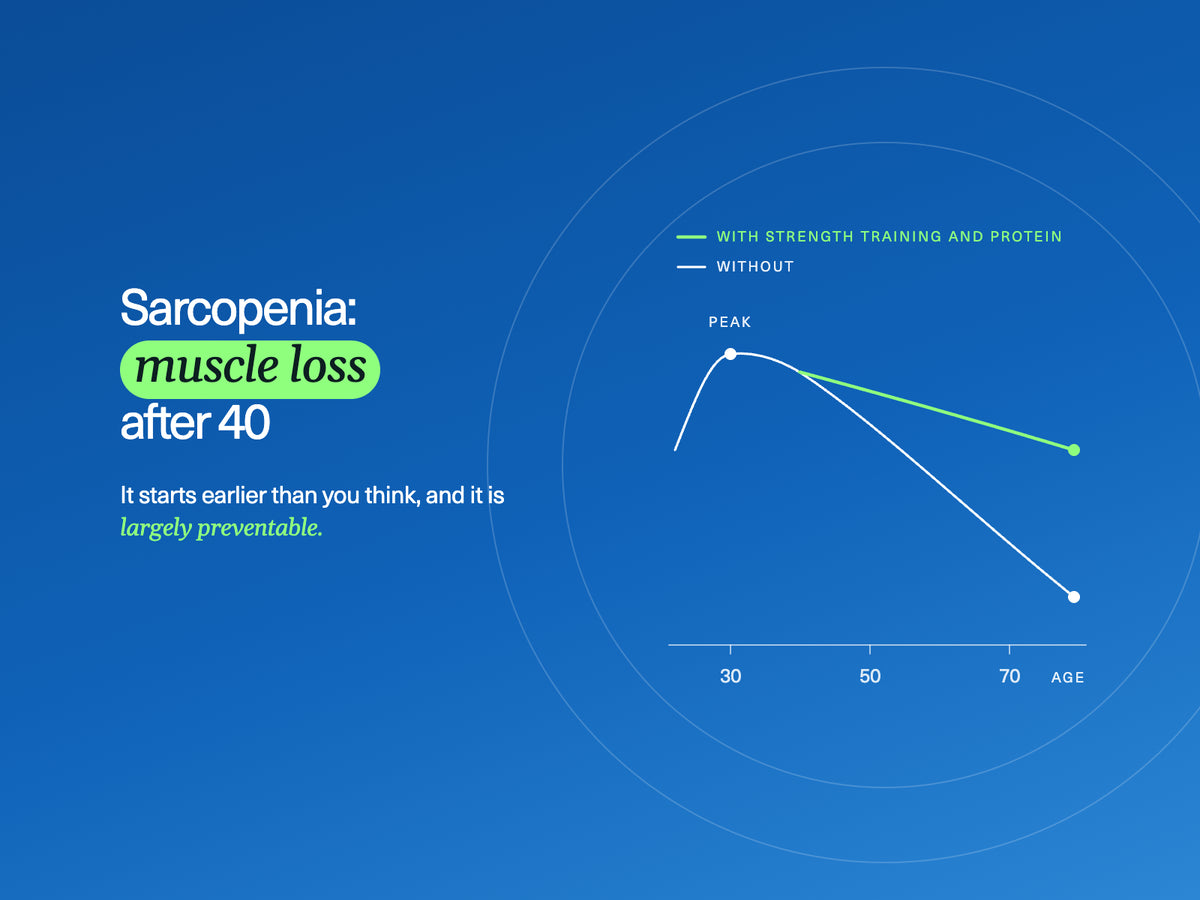
Muscle starts to go. Oestrogen helps maintain muscle. As it falls through perimenopause, lean mass begins to decline while fat, especially around the middle, builds faster. Researchers tracking women through this period found the shift begins about two years before the final period.
Muscle responds less to protein. With age, a meal needs more protein to switch on muscle building than it did at 25. A breakfast of tea and toast, or two idlis, does not reach that level.
Weight loss takes muscle with it. Many women diet in their 40s and 50s. In a study of postmenopausal women on weight-loss diets, those eating less protein lost more lean mass. Losing weight without enough protein means losing the tissue you most need to keep.
Why it matters later
Muscle is what lets you climb stairs, carry a grandchild and get up from the floor at 70. Losing it quietly in your 40s and 50s is what shows up as frailty in your 70s.
The Women's Health Initiative followed 24,417 women aged 65–79 who were not frail at the start. Three years later, 13.5% were. Women who ate 20% more protein had a 32% lower risk, and the more protein they ate, the lower it went. Other research in postmenopausal women links adequate protein to better physical performance.

How much protein do you need?
| Age | Daily protein per kg | For a 60kg woman |
|---|---|---|
| 30s | 0.8–1.0g | 48–60g |
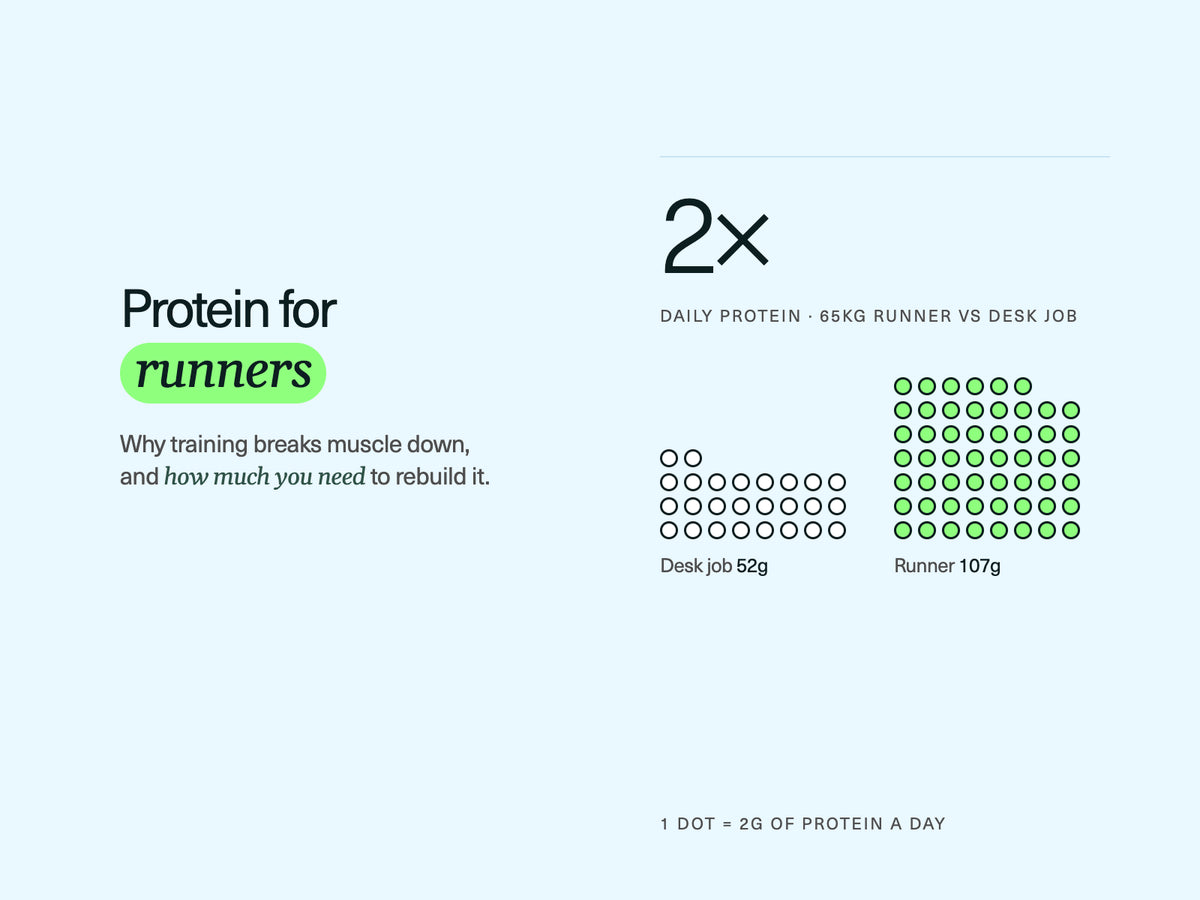
| 40s | 1.0–1.2g | 60–72g |
| 50s | 1.0–1.3g | 60–78g |
| 60s and over | 1.2–1.5g | 72–90g |
Aim for 25–30g at each meal, with enough leucine to trigger muscle building. More in How Much Protein Do You Need After 40? and Leucine: The Amino Acid That Decides Whether Your Protein Works.
Where most women fall short
Look at a typical day.
- Breakfast: tea, two idlis or toast. About 6–8g.
- Lunch: rice, dal, sabzi, curd. About 15–18g.
- Dinner: two rotis, dal or paneer, sabzi. About 15–20g.
That is around 40–45g, against a target of 60–72g. The biggest gap is breakfast. And in many homes, the woman of the house serves everyone else first and eats what is left.
“Won't protein make me bulky?”
No. Building visible bulk takes years of heavy training and a large calorie surplus. What protein does for a woman over 40 is keep the muscle she has: firmer arms, a steadier metabolism, strength for daily life.
Why women over 40 choose VaraPace
Most women know they should eat more protein. What stops them is practical: powders taste chalky, shakes are heavy, and nobody wants a 300ml drink on top of breakfast. VaraPace removes every one of those reasons.
- 24g of protein in 110ml. A few sips, not a meal replacement.
- 3.89g of leucine, enough to trigger muscle building in a single serving after 50.
- 98 calories, with no fat, sugar or carbs. Protein without adding to the day's calories.
- Zero lactose. No bloating.
- 1g of OptiMSM® for joints.
- Nothing to mix. It takes less time than making tea.
VaraPace is rated 4.96 out of 5 by 96 verified buyers.
“I saw a change in my energy levels within 4 weeks”
Jasleen K., verified buyer
“Fabb fabb fabbb and right product keeps u going through the day with the right amount of protein needed…”
Ushma J., verified buyer
Is it worth the price?
Yes. For ₹333 a day you get a full, effective serving of protein in 110ml that you will actually take every morning, and one shot at breakfast closes most of the gap above. See Is VaraPace Worth the Price?
A simple plan
- One VaraPace shot with breakfast. This fixes the weakest meal of the day.
- A real protein source at lunch and dinner: dal with paneer or curd, eggs, chicken or fish.
- Strength training twice a week. Protein protects muscle best when the muscle is being used.
- If you are losing weight, keep protein high so that what you lose is fat.
Try the VaraPace Assorted Pack
Taking it every morning? Subscribe and save up to 10%.
Frequently asked questions
How much protein does a woman over 40 need?
About 1.0–1.2g per kg of body weight a day in her 40s, which is 60–72g for a 60kg woman, rising to 1.2–1.5g per kg in her 60s.
Does menopause cause muscle loss?
Yes. Studies tracking women through menopause show lean mass begins to decline and fat gain accelerates from the start of the transition.
Will protein help with menopause weight gain?
Yes. Protein keeps muscle, which supports your metabolism, and it is filling. It works best alongside strength training.
Is whey protein safe for women?
Yes. Whey proteins, including BLG, are food proteins from milk. VaraPace is lactose-free.
When should women take protein?
At the meal where you get the least, which for most women is breakfast. See Best Time to Take Protein.
Can I take protein if I do not exercise?
Yes. Protein needs rise with age whether or not you train. You will get even more from it with some strength work.
References
- Greendale GA, et al. Changes in body composition and weight during the menopause transition. JCI Insight. 2019;4(5):e124865. https://pmc.ncbi.nlm.nih.gov/articles/PMC6483504
- Beasley JM, et al. Protein intake and incident frailty in the Women's Health Initiative observational study. J Am Geriatr Soc. 2010. https://pmc.ncbi.nlm.nih.gov/articles/PMC2924946
- Adequate dietary protein is associated with better physical performance among post-menopausal women 60–90 years. J Nutr Health Aging. 2014. https://pubmed.ncbi.nlm.nih.gov/24522467/
- Lean mass loss is associated with low protein intake during dietary-induced weight loss in postmenopausal women. J Am Diet Assoc. 2008. https://pubmed.ncbi.nlm.nih.gov/18589032/
- ICMR-National Institute of Nutrition. Recommended Dietary Allowances and Estimated Average Requirements, 2020: brief note. https://www.nin.res.in/rdabook/brief_note.pdf
- Moore DR, et al. Protein ingestion to stimulate myofibrillar protein synthesis requires greater relative protein intakes in healthy older versus younger men. J Gerontol A. 2015;70(1):57–62. https://pubmed.ncbi.nlm.nih.gov/25056502/
This article is for general information and is not medical advice. Speak to your doctor before changing your diet if you have kidney disease or another medical condition.