





Your Cart Is Empty!

Protein for Runners: How Much You Need and When
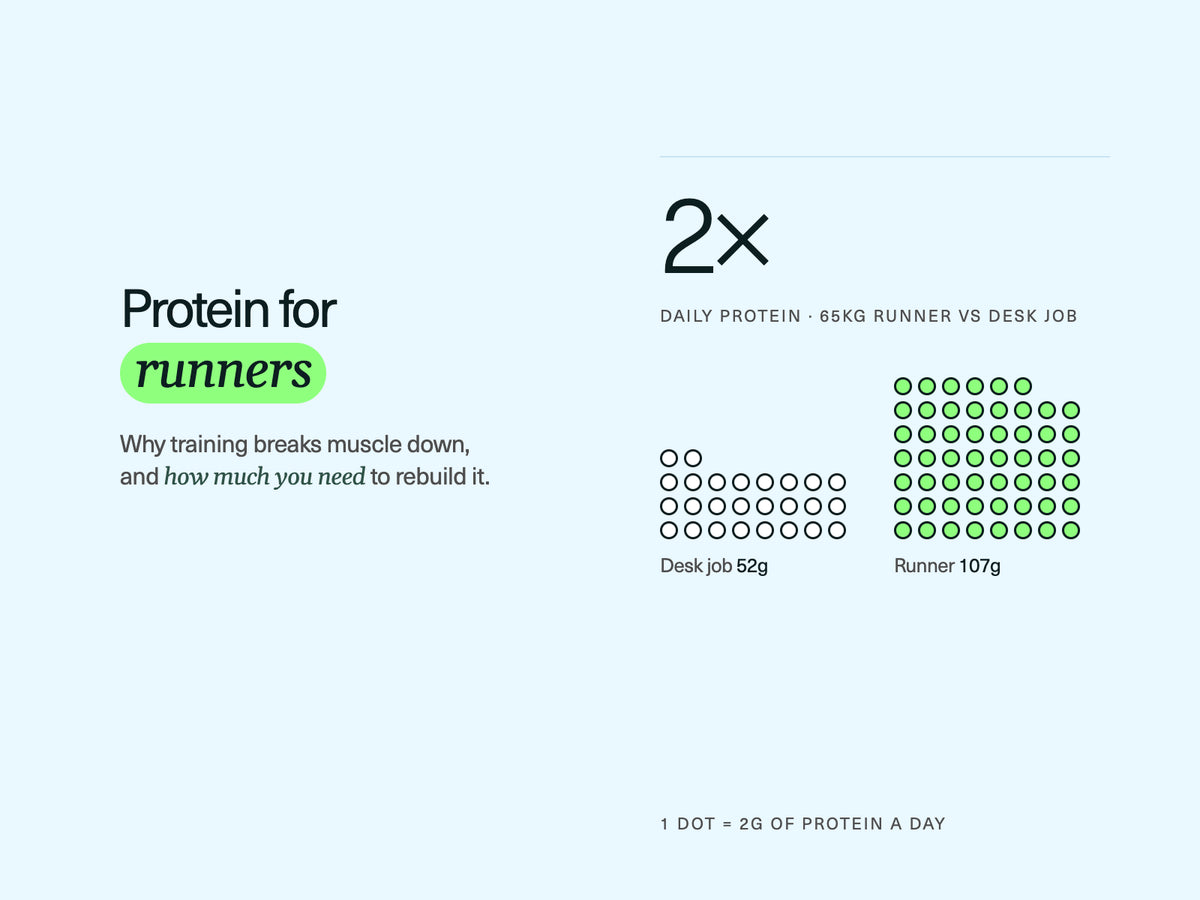
Runners need far more protein than most people think. A study that measured endurance runners directly put their need at 1.65–1.83g per kg of body weight on training days, about twice the 0.8g per kg set for inactive adults. For a 65kg runner, that is roughly 105–120g a day. Take 20–25g of high-quality protein soon after every run, pair it with carbohydrate after long runs, and spread the rest across the day.
You run four or five days a week. You are training for a 10K, a half or a full marathon. You watch your carbs, your water and your shoes. Protein? That is for the people lifting weights at the gym. It is not. Every long run breaks muscle down, and your body needs protein to rebuild it. Fall short, and you recover slower, lose muscle you worked for, and feel heavier on every run that follows. After 40, the gap matters even more.
Key facts
- Recognised sports nutrition bodies recommend 1.2–2.0g of protein per kg of body weight a day for athletes. Inactive adults need 0.8g per kg.
- A study that measured protein needs in endurance runners after a 20km run found they need 1.65g per kg a day on average, and 1.83g per kg to cover almost everyone.
- During long runs, your body burns amino acids for fuel and breaks down more muscle protein.
- After exercise, 0.25–0.3g of protein per kg of body weight, about 15–25g, kick-starts muscle repair.
- Protein taken with carbohydrate after exercise improves your muscle protein balance compared with carbohydrate alone.
- Adults over 50 need about 3.5g of leucine in a meal to fully switch on muscle building. One VaraPace shot provides 3.89g.
Why runners need more protein
Running breaks muscle down. Every stride loads your legs. On a long run, your body also burns some of its own amino acids for energy, and the breakdown of muscle protein rises while you run. Researchers measuring this in trained runners estimated that a single 20km run burned around 14g of protein as fuel.
Rebuilding needs raw material. After the run, your muscles repair and adapt, and that process keeps going for up to 24 hours. This is how you get fitter. It needs a steady supply of amino acids, which come only from protein.
Running harder raises the bar. When researchers measured protein needs directly in endurance runners the day after a 20km run, the answer was 1.65g per kg a day on average. That is about twice what an inactive adult needs, and higher than the older advice for endurance athletes.
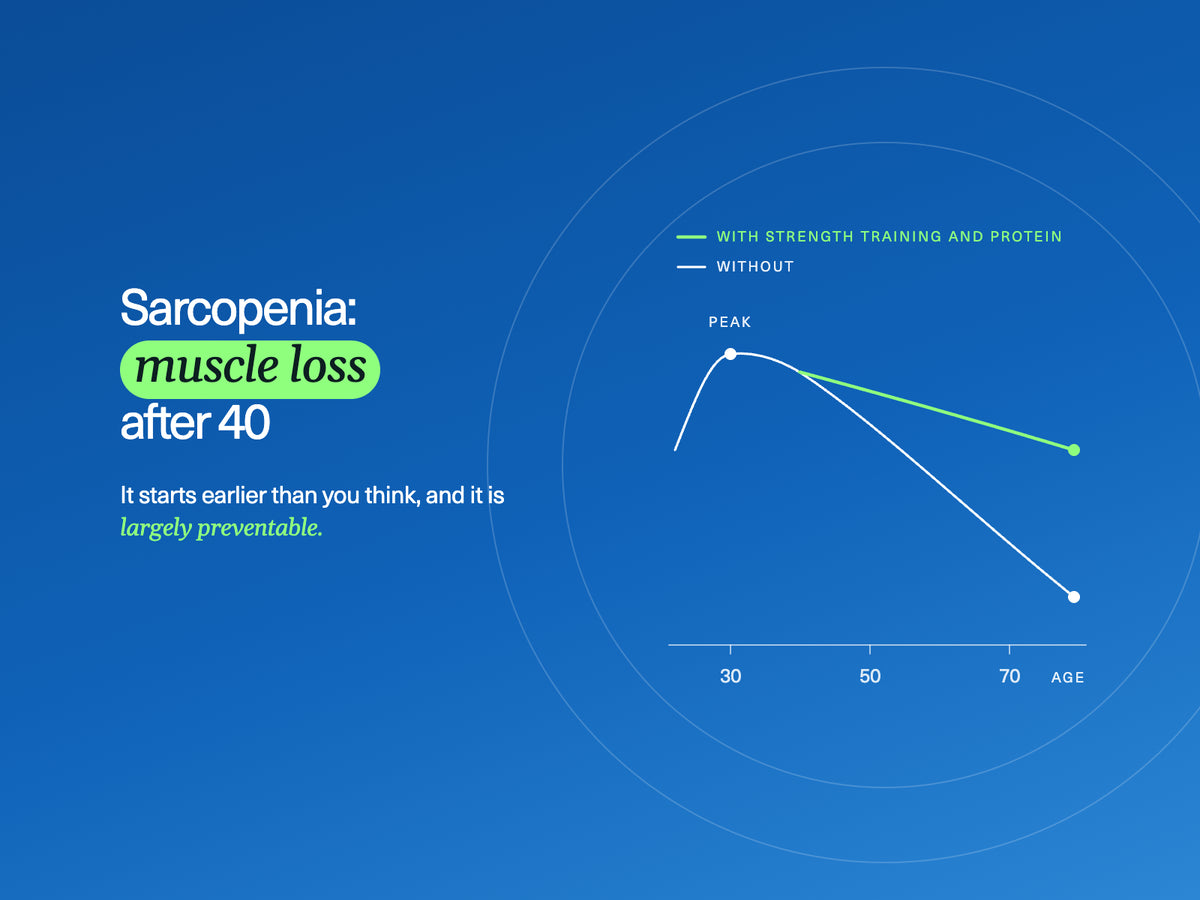
After 40, muscle needs a bigger push. Older muscle responds less to the same meal. Adults over 50 need about 3.5g of leucine in one meal to fully switch on muscle building, so a light breakfast or a cup of tea after your run does very little. See Leucine: The Amino Acid That Decides Whether Your Protein Works and How Much Protein Do You Need After 40?
Under-fuelling costs you. The joint sports nutrition position from the American College of Sports Medicine and North America's two dietetics bodies links too little energy with lost muscle, fatigue, injury, illness and slower recovery. Runners who eat light and skip protein are the most exposed.
How much protein do runners need?
Start with your body weight. On training days, aim for 1.6–1.8g of protein per kg. After each run, aim for 0.3g per kg in one serving.
| Body weight | Inactive adult (0.8g/kg) | Runner on training days (1.6–1.8g/kg) | After a run (0.3g/kg) |
|---|---|---|---|
| 50kg | 40g | 80–90g | 15g |
| 55kg | 44g | 88–99g | 17g |
| 60kg | 48g | 96–108g | 18g |
| 65kg | 52g | 104–117g | 20g |
| 70kg | 56g | 112–126g | 21g |
| 75kg | 60g | 120–135g | 23g |
| 80kg | 64g | 128–144g | 24g |
Worked example: a 65kg runner
- Inactive need: 65 × 0.8 = 52g a day.
- Training-day need: 65 × 1.65 = 107g on average, and 65 × 1.83 = 119g to be sure.
- After a run: 65 × 0.3 = about 20g, within 0 to 2 hours.
- Across the day: 0.3g per kg every 3–5 hours, so about 20g at four or five points in the day.
A typical Indian day gives about 40–45g of protein. That leaves a 65kg runner 60g or more short on training days.

When to take it
After every run
The first two hours after a run are when your muscles are most ready to rebuild. That is when 15–25g of high-quality protein does the most work. One VaraPace shot gives you 24g, which covers the post-run dose for runners up to 80kg.
Add carbohydrate after long runs
A long run drains the carbohydrate stored in your muscles, and refilling it is the other half of recovery. When you need to recover quickly, the sports nutrition guidelines recommend 1.0–1.2g of carbohydrate per kg per hour for the first four to six hours. For a 65kg runner, that is 65–78g an hour.
Protein and carbohydrate work as a team. Taken together after exercise, they improve muscle protein balance more than carbohydrate alone. Enough carbohydrate also means your body uses protein for repair, not for fuel.
VaraPace is pure protein, with zero carbs, so you decide the carbohydrate. After a run of an hour or more, have your shot with:
- a banana or two
- a handful of dates
- a plate of poha or upma
- curd rice or idlis
On an easy day, the shot on its own is enough until your next meal.
Spread the rest across the day
Your muscles use protein best in regular servings, not one big dinner. Aim for about 0.3g per kg every 3–5 hours: breakfast, after your run, lunch and dinner. For more on timing, see The Best Time to Take Protein.
Why runners choose VaraPace
Nobody wants a thick, milky shake after a hot run in Mumbai or Chennai. VaraPace is built for exactly that moment.
- Light, clear and juice-like. 110ml, four fruit flavours. It goes down easily when you are hot and tired. See VaraPace vs Clear Whey.
- 24g of protein, 3.89g of leucine. A full post-run dose, with enough leucine to switch on muscle building even after 50.
- Zero lactose. No bloating on a sensitive post-run stomach.
- 98 calories. Zero sugar, fat and carbs. Pure protein, so you choose the carbohydrate that suits the run.
- 1g of OptiMSM® for your joints. Running asks a lot of knees and ankles. See MSM for Joints.
- Nothing to mix, no fridge until opened. Slip it in your running belt or kit bag. It tastes best chilled.
- Vegetarian. Its protein, BLG, comes from milk.
VaraPace is rated 4.96 out of 5 by 96 verified buyers.
“delivers professional-grade muscle and mobility recovery in a compact, travel-friendly bottle.”
Vikrant B., verified buyer
“Helped me with my recovery and definitely something i will come back to again and again!”
Shubhra R., verified buyer
Is it worth the price?
Yes. At ₹333 a shot in a pack of 24, you get a complete post-run protein dose that you will actually drink, every training day, with nothing to mix or clean. Making up the same 24g from food straight after a run is hard work, and it rarely happens. The full numbers are in Is VaraPace Worth the Price?
A runner's protein plan
- Work out your number. Multiply your weight in kg by 1.6–1.8. That is your training-day target.
- One VaraPace shot within two hours of every run. Keep it in your kit bag so it is there when you finish.
- Long run? Add carbohydrate. A banana, dates or a plate of poha with your shot.
- Protein at every meal. Curd, paneer, eggs, dal with sprouts, chicken or fish at breakfast, lunch and dinner.
- Strength train twice a week. Squats, lunges and calf raises make your legs more robust, and protein helps you get the most from them.
Try the VaraPace Assorted Pack
Running most days? Subscribe and save up to a further 10%.
Frequently asked questions
Do runners need protein?
Yes. Running breaks muscle down and burns some amino acids for fuel. Runners need about 1.6–1.8g of protein per kg on training days, around twice what an inactive adult needs.
How much protein should I have after a run?
About 0.3g per kg of body weight, within two hours. That is 15–25g for most runners. One VaraPace shot gives 24g.
Should I have protein or carbs after a long run?
Both. Carbohydrate refills your energy stores, and protein rebuilds muscle. Together they work better than carbohydrate alone. Have your VaraPace shot with a banana, dates or poha.
Can I take VaraPace before a run?
Yes. It is light, 110ml and lactose-free, so it sits easily. It does the most work afterwards, when your muscles are ready to rebuild.
I am over 40. Do I need more protein?
Yes. Older muscle needs more protein, and more leucine, per meal to respond. Aim for about 3.5g of leucine at each meal. One VaraPace shot gives 3.89g.
Will protein make me bulky and slow?
No. Running and protein together repair and maintain muscle. Bulk comes from heavy lifting and a large calorie surplus, not from a post-run protein shot.
References
- Thomas DT, Erdman KA, Burke LM. Position of the Academy of Nutrition and Dietetics, Dietitians of Canada, and the American College of Sports Medicine: Nutrition and Athletic Performance. J Acad Nutr Diet. 2016;116(3):501–528. Full text
- Jäger R, et al. International Society of Sports Nutrition Position Stand: protein and exercise. J Int Soc Sports Nutr. 2017;14:20. Full text
- Kato H, Suzuki K, Bannai M, Moore DR. Protein requirements are elevated in endurance athletes after exercise as determined by the indicator amino acid oxidation method. PLoS One. 2016;11(6):e0157406. Full text
- Moore DR, et al. Protein ingestion to stimulate myofibrillar protein synthesis requires greater relative protein intakes in healthy older versus younger men. J Gerontol A. 2015;70(1):57–62. PubMed
This article is for general information and is not medical advice. Speak to your doctor before changing your diet if you have kidney disease or another medical condition.