


Your Cart Is Empty!


Maximizing the Benefits: When to Take NMN and Resveratrol Supplements
Introduction
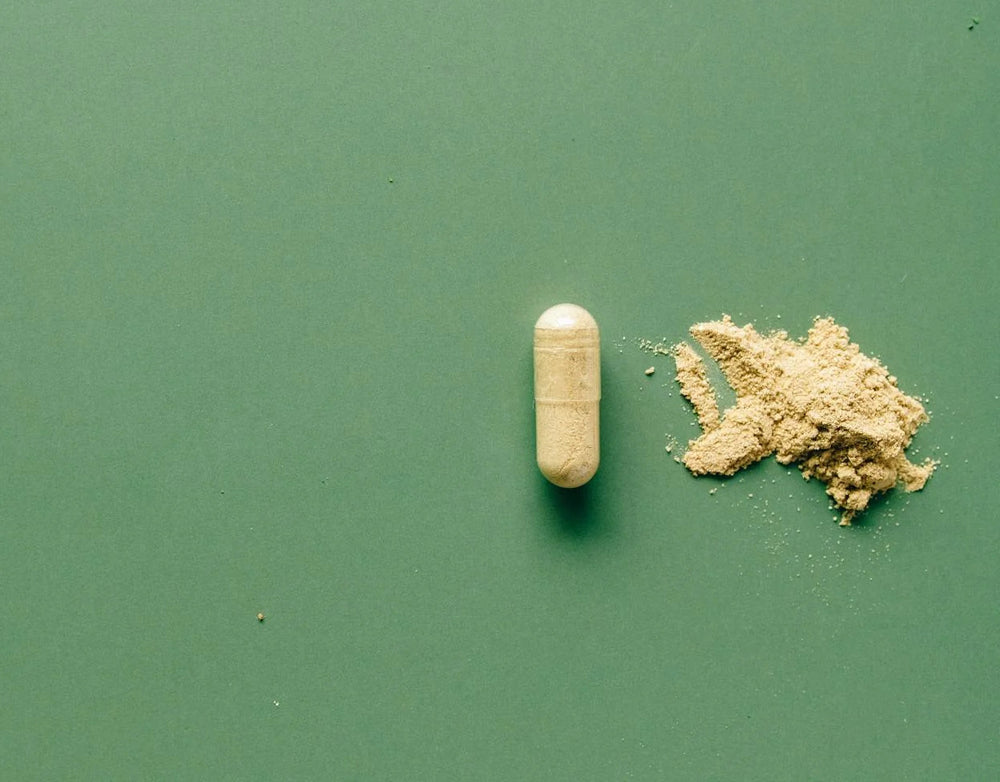
In the pursuit of health and longevity, many turn to supplements like NMN (Nicotinamide Mononucleotide) and Resveratrol like VaraSpan®. These compounds have garnered attention for their potential anti-aging effects and overall health benefits. However, the timing of when to take these supplements can significantly impact their effectiveness. Let's explore the science behind the best time to consume NMN and Resveratrol supplements in simple terms.
When should you take NMN and resveratrol?
Most published human protocols use NMN once in the morning with breakfast, at 250-500 mg for adults, and pair it with 200-500 mg trans-resveratrol taken with a fat-containing meal to improve absorption. NMN's plasma half-life is short but cellular NAD+ elevation is sustained for 24-48 hours (Yoshino 2021). Higher single doses beyond 900 mg have not shown additional benefit in RCTs to date.
Key facts
- Trans-resveratrol has approximately 1% oral bioavailability due to rapid first-pass metabolism; pterostilbene is ~4-5× higher (Kapetanovic 2011).
- NMN raises cellular NAD+ by 30-70% at 250-500 mg/day over 8-12 weeks (Yoshino 2021).
- Single-dose NAD+ elevation is sustained 24-48 hours in humans (pharmacokinetic sub-study).
Understanding Circadian Rhythms:
Our bodies operate on a natural rhythm known as the circadian rhythm, which regulates various physiological processes, including metabolism and energy production. Research suggests that certain nutrients and supplements may be more effectively absorbed and utilized when consumed in alignment with our circadian rhythms.
Morning Boost

One of the optimal times to take NMN and Resveratrol supplements is in the morning. This timing coincides with the body's peak energy production and metabolic activity, potentially enhancing the absorption and utilization of these compounds. By providing a boost of these supplements like VaraSpan® in the morning, we may support our body's natural energy pathways, aiding in overall vitality and well-being throughout the day.
Fueling Exercise

Before engaging in physical activity, such as exercise, taking NMN and Resveratrol supplements might offer additional benefits. These compounds have been studied for their potential to improve mitochondrial function, the powerhouse of our cells responsible for energy production. By consuming these supplements before exercise, we may amplify the positive effects of physical activity on mitochondrial health, potentially enhancing endurance and recovery.
Mealtime Advantage

Consuming NMN and Resveratrol supplements (VaraSpan®) with meals can also be advantageous. Pairing these supplements with food, especially meals containing healthy fats, may improve their absorption. Fat-soluble compounds like Resveratrol may benefit from the presence of dietary fats, enhancing their bioavailability and ensuring they reach their intended targets within the body.
Nighttime Support

While morning and mealtime are popular choices for supplement intake, some individuals prefer taking NMN and Resveratrol supplements before bed. Resveratrol, in particular, has been studied for its potential sleep-promoting effects. By taking these supplements in the evening, we may support restful sleep and overall well-being.
Conclusion
The best time to take NMN and Resveratrol supplements ultimately depends on individual preferences and goals. However, by considering the science behind circadian rhythms and nutrient absorption, we can make informed choices to maximize the benefits of these supplements. Whether it's a morning boost, pre-exercise support, mealtime advantage, or nighttime support, timing our supplement intake strategically can help us optimize our health and vitality.
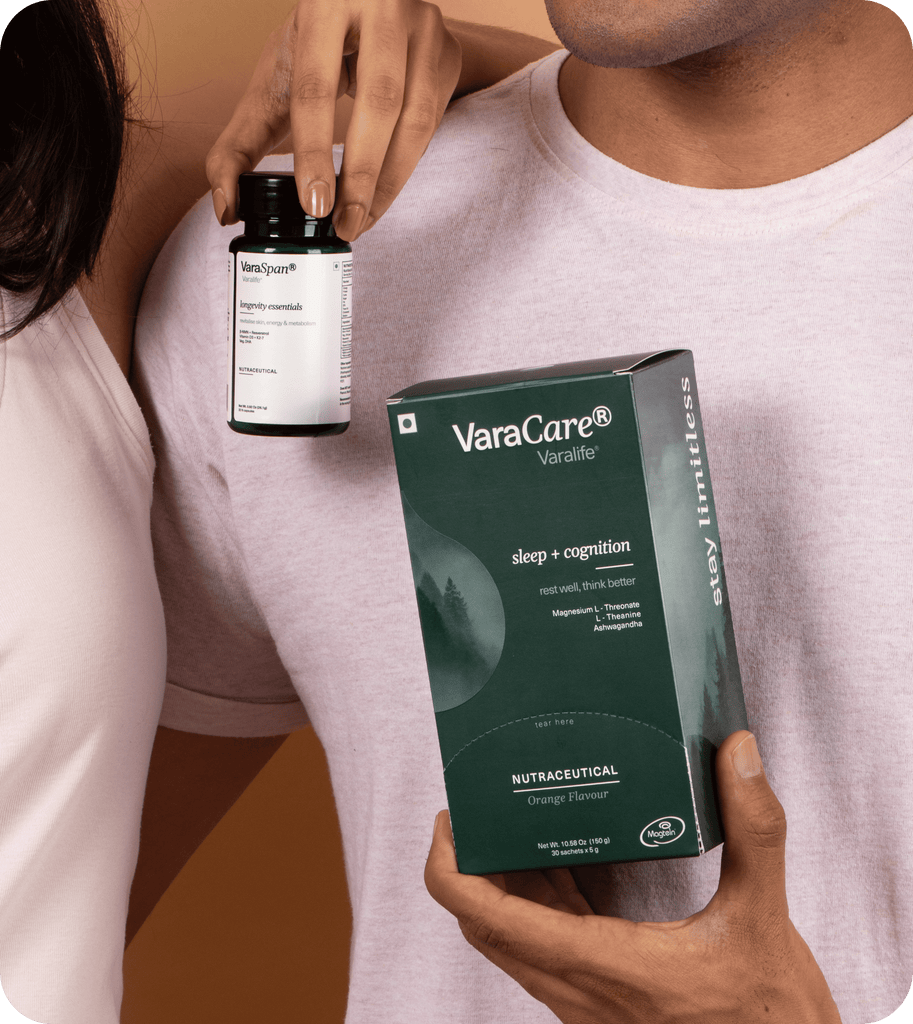
Varalife® is on a quest to extend human longevity. Our 5-in-1 NMN Supplement VaraSpan® helps increase NAD+ levels from Day 1 itself. VaraSpan® Revolutionary Anti-Aging formulation with ingredients backed by experts from Harvard Medical School and Stanford University.
References
-
Mendelsohn & Larrick. (2021). Circadian Enhancement of the NAD+/Sirtuin Pathway with Niacin and NMN. Aging, 13(3), 2804–2821.
-
Sinclair, D. (2019). Lifespan: Why We Age and Why We Don't Have To. Atria Books.
-
Patrick, R. (2020). FoundMyFitness Podcast. Episode 146 - Q&A: NMN, Resveratrol, Fasting, and More.
This blog offers general insights and should not replace professional medical advice. Consult with a healthcare provider before starting any new supplement regimen.
Best Time to Take NMN: Morning With Breakfast
Most published human RCT protocols dose NMN once in the morning with breakfast, at 250 to 500 mg for adults. Morning timing aligns with the natural circadian NAD+ peak and pairs well with the fasted-to-fed metabolic transition. NMN's plasma half-life is short (~1 hour), but cellular NAD+ elevation from a single oral dose is sustained for 24 to 48 hours (Yoshino 2021, Science). Some studies split the dose morning and afternoon at higher intakes (>500 mg/day) with no observed difference in NAD+ elevation.
Best Time to Take Resveratrol: Morning or Night?
Trans-resveratrol is best taken with a fat-containing meal because its ~1% oral bioavailability is meaningfully improved by co-ingestion with dietary fat (Kapetanovic 2011). Morning-with-breakfast timing is standard in NMN + resveratrol stack protocols, since both molecules work on the NAD+ / sirtuin pathway and pairing them in one dose is convenient. Nighttime resveratrol has been explored in sleep-related studies but has no clear advantage over morning dosing in the general longevity context. Pterostilbene, a dimethyl-ether variant, has 4-5x higher bioavailability and a longer half-life (Kapetanovic 2011).
NMN and Resveratrol Benefits: What the Combined Evidence Shows
NMN and trans-resveratrol are commonly stacked because they act on the same cellular pathway from different angles. NMN raises cellular NAD+ by roughly 38% at 250 mg/day over 12 weeks (Yoshino 2021, Science), providing the substrate the sirtuin family of enzymes needs to function. Trans-resveratrol at 200-500 mg/day activates SIRT1, the most-studied sirtuin, but has poor oral bioavailability of around 1% (Kapetanovic 2011). Combined, the stack pairs improved substrate availability with direct enzymatic activation. Reported outcomes in human RCTs across the two molecules include improved insulin sensitivity, gait speed, sleep quality, and skin elasticity. The combination is not a treatment for any specific disease.
Resveratrol vs Pterostilbene: Head-to-Head
| Attribute | Trans-Resveratrol | Pterostilbene |
|---|---|---|
| Chemistry | 3,5,4'-trihydroxystilbene | Dimethyl-ether variant (3,5-dimethoxy-4'-hydroxystilbene) |
| Oral bioavailability | ~1% (extensive first-pass metabolism) | ~4–5× higher than resveratrol (Kapetanovic 2011) |
| Plasma half-life | ~1 hour | ~7–15 hours |
| SIRT1 activation | Established (multiple in vitro + animal studies) | Established; sometimes stronger in vitro |
| Human RCT data volume | Extensive across 20+ years | Emerging; fewer pharma-grade human RCTs published to date |
| Pairing with NMN in NAD+ stacks | Standard combination in longevity protocols (see Sinclair-lab publications) | Emerging; sometimes chosen for bioavailability profile |
| Typical retail cost per gram (India, pharma-grade, 2026) | ~₹40–80 (98%+ trans-resveratrol) | ~₹250–500 |
| Best fit for | Cost/data ratio; well-studied longevity partner molecule | Cases where bioavailability + longer half-life matter more than cost |
Can I Take Resveratrol Before Bed?
You can, but morning-with-breakfast timing has stronger evidence support in published protocols. Trans-resveratrol's ~1% oral bioavailability is meaningfully improved by co-ingestion with dietary fat (Kapetanovic 2011) — so pairing it with a fat-containing meal at any time of day works. Nighttime timing has been explored in circadian-alignment studies (resveratrol has weak melatonin-agonist activity in preclinical work) but no published human RCT has shown a night-vs-morning benefit difference. If you take it before bed, pair with almonds, cheese, or avocado to preserve the absorption boost from dietary fat.


