





Your Cart Is Empty!


What are the Benefits of NMN?
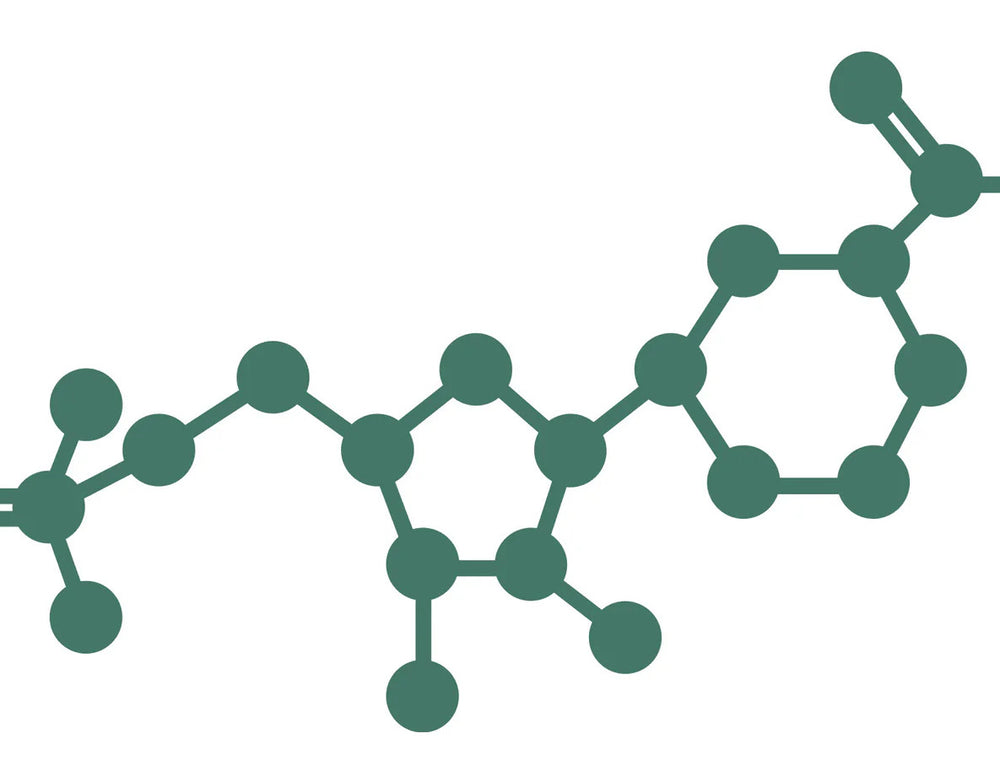
Introduction
In recent years, Nicotinamide Mononucleotide (NMN) has garnered significant attention in the health and wellness community for its potential benefits. As a precursor to Nicotinamide Adenine Dinucleotide (NAD+), a coenzyme involved in various cellular processes, NMN has been studied for its potential role in promoting overall health and longevity. In this article, we'll delve into the benefits of NMN supported by scientific research.
What are the benefits of NMN?
NMN (nicotinamide mononucleotide) raises cellular NAD+ levels, which decline with age. In a 12-week RCT, 250 mg/day of NMN raised whole-blood NAD+ by roughly 38% and improved measures of muscle function and sleep in older adults (Yoshino 2021). Documented benefits from human RCTs include NAD+ elevation, gait speed, sleep quality, and skin elasticity. NMN does not prevent disease and is not a stimulant.
Key facts
- In a 12-week RCT, 250 mg/day NMN raised whole-blood NAD+ by roughly 38% in prediabetic women (Yoshino 2021, Science).
- NAD+ levels fall by approximately 50% between ages 20 and 60 (Imai & Guarente 2014).
- 1200 mg/day of NMN was well tolerated for 60 days in a randomized safety trial (Yamane 2023).
Anti-Aging Properties

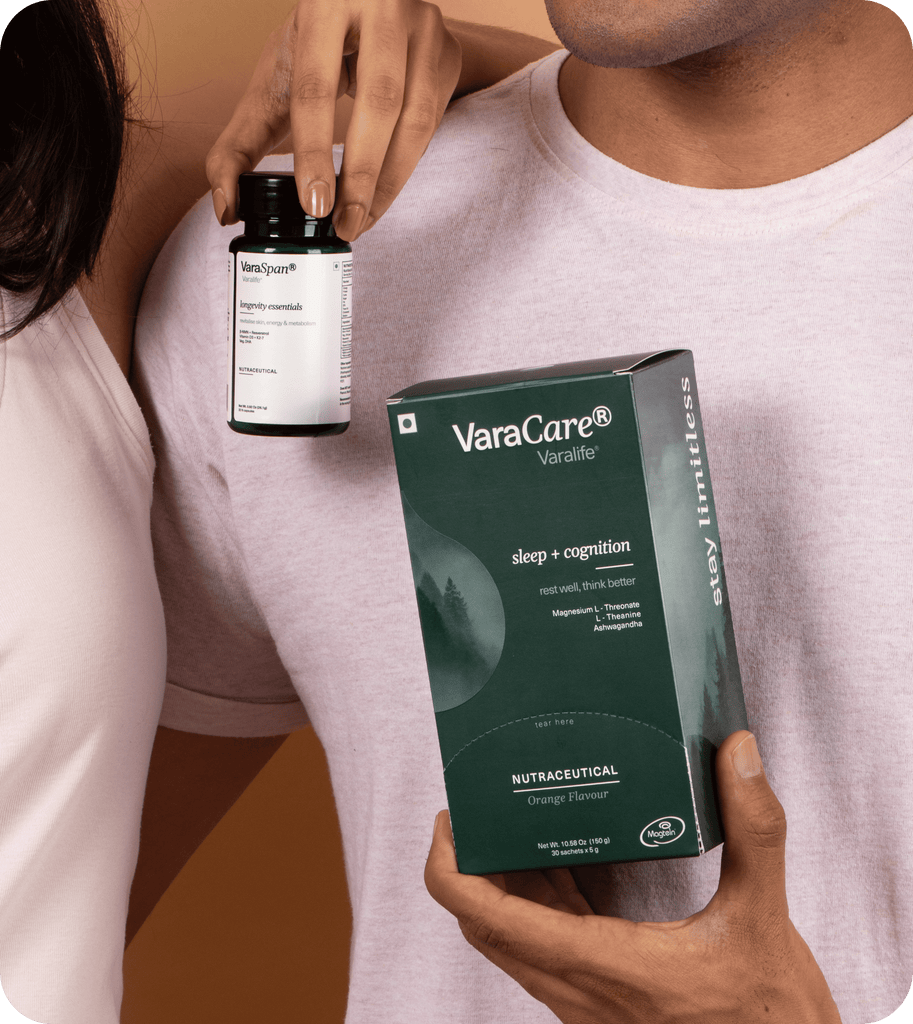
NMN supplementation like VaraSpan® has been linked to anti-aging effects due to its role in boosting NAD+ levels in cells. NAD+ is crucial for cellular metabolism and energy production. As we age, NAD+ levels decline, leading to cellular dysfunction and age-related health issues. By replenishing NAD+ levels, NMN may support cellular repair mechanisms, potentially slowing down the aging process. (1)
Enhanced Metabolic Function

Research suggests that NMN supplementation may improve metabolic function by enhancing mitochondrial function and promoting efficient energy production. Mitochondria are the powerhouses of the cell responsible for generating energy. NMN supports mitochondrial health by optimizing NAD+ levels, thereby improving metabolism and reducing the risk of metabolic disorders such as obesity and diabetes. (2)
Cognitive Support

NAD+ plays a crucial role in maintaining cognitive function and brain health. Studies have shown that NMN supplementation may help protect against age-related cognitive decline by supporting neuronal repair and improving brain energy metabolism. Additionally, NMN has been linked to enhanced cognitive function, memory retention, and neuroprotection in preclinical studies. (3)
Cardiovascular Health

NMN has shown promising potential in promoting cardiovascular health by supporting vascular function and reducing oxidative stress. By increasing NAD+ levels, NMN may help improve endothelial function, regulate blood pressure, and reduce the risk of cardiovascular diseases such as atherosclerosis and heart failure. Furthermore, NMN's antioxidant properties may protect against oxidative damage to blood vessels, thereby supporting overall cardiovascular function. (4)
Exercise Performance and Recovery

Some research suggests that NMN supplementation may enhance exercise performance and improve recovery by boosting cellular energy production and reducing muscle fatigue. By supporting mitochondrial function and increasing NAD+ levels, NMN may help athletes perform better during workouts and recover faster post-exercise. Additionally, NMN's anti-inflammatory properties may aid in reducing exercise-induced muscle damage and inflammation. (5)
NMN vs NR (Nicotinamide Riboside): Head-to-Head
| Attribute | NMN (Nicotinamide Mononucleotide) | NR (Nicotinamide Riboside) |
|---|---|---|
| Position in NAD+ biosynthesis | Direct 1-step precursor to NAD+ (via NMNAT enzymes) | 2 steps to NAD+ (NR → NMN → NAD+ via NRK enzymes) |
| Molecular weight | 334.22 g/mol | 255.25 g/mol |
| Peer-reviewed NAD+ elevation (blood, humans) | 250 mg/day raised whole-blood NAD+ by ~38% at 12 weeks (Yoshino 2021, Science) | 1000 mg/day raised NAD+ by ~60% at 6 weeks (Martens 2018, Nat Commun) |
| Highest safety-tested oral dose in RCT | 1200 mg/day well-tolerated in 60-day RCT (Yamane 2023) | 2000 mg/day well-tolerated in 8-week RCT (Conze 2019) |
| US FDA status (dietary supplement) | Removed from NDI notification list Oct 2022; contested legal status | Fully permitted as dietary supplement (Niagen brand GRAS-affirmed) |
| India FSSAI status | Legal as dietary supplement | Legal as dietary supplement |
| Retail price per gram (India, pharma-grade, 2026) | ~₹15–25 (Chinese pharma-grade, imported bulk) | ~₹80–120 (import-driven, patent-restricted) |
Conclusion
Nicotinamide Mononucleotide (NMN) holds promise as a supplement with various potential health benefits. From its anti-aging properties to its role in supporting metabolic function, cognitive health, cardiovascular health, and exercise performance, NMN continues to be the subject of extensive research. However, it's essential to note that while preliminary studies are promising, more research is needed to fully understand the long-term effects and optimal dosage of NMN supplementation.
Varalife® is on a quest to extend human longevity. Our 5-in-1 NMN Supplement VaraSpan® helps increase NAD+ levels from Day 1 itself. VaraSpan® Revolutionary Anti-Aging formulation with ingredients backed by experts from Harvard Medical School and Stanford University.
NMN Benefits for Longevity: What the Research Shows in 2026
The longevity case for NMN rests on three peer-reviewed pillars. First, cellular NAD+ declines by around 50% between ages 20 and 60 (Imai & Guarente 2014), impairing DNA repair, mitochondrial function, and sirtuin activity. Second, NMN at 250-500 mg/day restores whole-blood NAD+ by 30-70% within 8-12 weeks in human RCTs (Yoshino 2021). Third, NAD+ decline sits upstream of at least three of the twelve hallmarks of aging: mitochondrial dysfunction, sirtuin-driven DNA repair, and cellular senescence (Lopez-Otin 2023). Long-term human lifespan extension from NMN specifically has not been proven and would take decades to demonstrate. NMN targets a cellular root deficit, not a specific disease.
Nicotinamide Mononucleotide Benefits: The Full-Name Overview
Nicotinamide mononucleotide (NMN) is a naturally occurring molecule found in trace amounts in broccoli, avocado, and cabbage. As a supplement, it delivers documented benefits centered on restoring cellular NAD+. In human RCTs, 250 to 500 mg/day raises whole-blood NAD+ by 30 to 70% over 8 to 12 weeks (Yoshino 2021), with measured improvements in insulin sensitivity, gait speed, sleep quality, and skin elasticity (Miyawaki 2023). Nicotinamide mononucleotide is chemically distinct from nicotinamide riboside (NR); NMN is one enzymatic step from NAD+ while NR requires two.
NMN Supplement Benefits: Practical Summary for Adults
The documented benefits of NMN supplements in human RCTs to date include: cellular NAD+ elevation (30 to 70% at 250-500 mg/day over 8-12 weeks) (Yoshino 2021), improved insulin sensitivity in prediabetic adults, improved gait speed in older adults, improved sleep quality, and improved skin elasticity and hydration (Miyawaki 2023). Safety has been established up to 1200 mg/day for 60 days in a randomized trial (Yamane 2023). NMN does not treat any specific disease. It is best paired with foundational lifestyle interventions: sleep, resistance training, and calorie-controlled nutrition.
References
- Zhang H, Ryu D, Wu Y, et al. NAD+ repletion improves mitochondrial and stem cell function and enhances life span in mice. Science. 2016;352(6292):1436-1443.
- Mills KF, Yoshida S, Stein LR, et al. Long-term administration of nicotinamide mononucleotide mitigates age-associated physiological decline in mice. Cell Metab. 2016;24(6):795-806.
- Stein LR, Imai S. Specific ablation of Nampt in adult neural stem cells recapitulates their functional defects during aging. EMBO J. 2014;33(12):1321-1340.
- de Picciotto NE, Gano LB, Johnson LC, et al. Nicotinamide mononucleotide supplementation reverses vascular dysfunction and oxidative stress with aging in mice. Aging Cell. 2016;15(3):522-530.
- Uddin GM, Youngson NA, Sinclair DA, Morris MJ. Head to Head Comparison of Short-Term Treatment with the NAD(+) Precursor Nicotinamide Mononucleotide (NMN) and 6 Weeks of Exercise in Obese Female Mice. Front Pharmacol. 2016;7:258.


