




Your Cart Is Empty!


Do NMN Supplements Really Work?


Do NMN supplements actually work?
Yes, for the biomarker they are designed to move: multiple human RCTs show 250-500 mg/day of NMN raises whole-blood NAD+ by 30-70% within 8-12 weeks (Yoshino 2021). Downstream benefits documented in trials include improved gait speed, sleep quality, and skin elasticity. NMN does not treat any disease; it restores a cellular co-factor whose decline is correlated with age-related dysfunction.
Key facts
- Multiple human RCTs show 250-500 mg/day NMN raises whole-blood NAD+ by 30-70% over 8-12 weeks (Yoshino 2021).
- Yamane 2023: 1200 mg/day NMN was well tolerated for 60 days with no serious adverse events (safety RCT).
- Downstream outcomes in RCTs include improved gait speed, sleep quality, and skin elasticity.
Understanding NMN

Nicotinamide Mononucleotide (NMN) is a precursor to nicotinamide adenine dinucleotide (NAD+), a coenzyme found in all living cells. NAD+ plays a crucial role in various biological processes, including energy metabolism, DNA repair, and gene expression regulation. As we age, NAD+ levels decline, leading to a range of age-related issues.
The Importance of NMN Supplements

NMN supplements are gaining attention due to their potential to boost NAD+ levels in the body. By providing a direct precursor to NAD+, NMN supplements support cellular functions and may help counteract the effects of aging. Research suggests that NMN supplementation could improve mitochondrial function, enhance metabolism, and promote overall cellular health.
The Role of NAD+ Decline in Aging

As NAD+ levels decline with age, several processes in the body are affected. Mitochondrial dysfunction, impaired DNA repair, and altered gene expression contribute to age-related decline in cellular function. This decline is associated with various health issues, including reduced energy levels, cognitive decline, and increased susceptibility to chronic diseases.
How NMN Supplements Work

NMN supplements work by providing a direct precursor to NAD+, thus replenishing cellular NAD+ levels. By doing so, NMN supports mitochondrial function, enhances energy production, and aids in DNA repair processes. This revitalization of cellular function may contribute to improved overall health and vitality.
VaraSpan®: Revolutionary 5-in-1 NMN Supplement

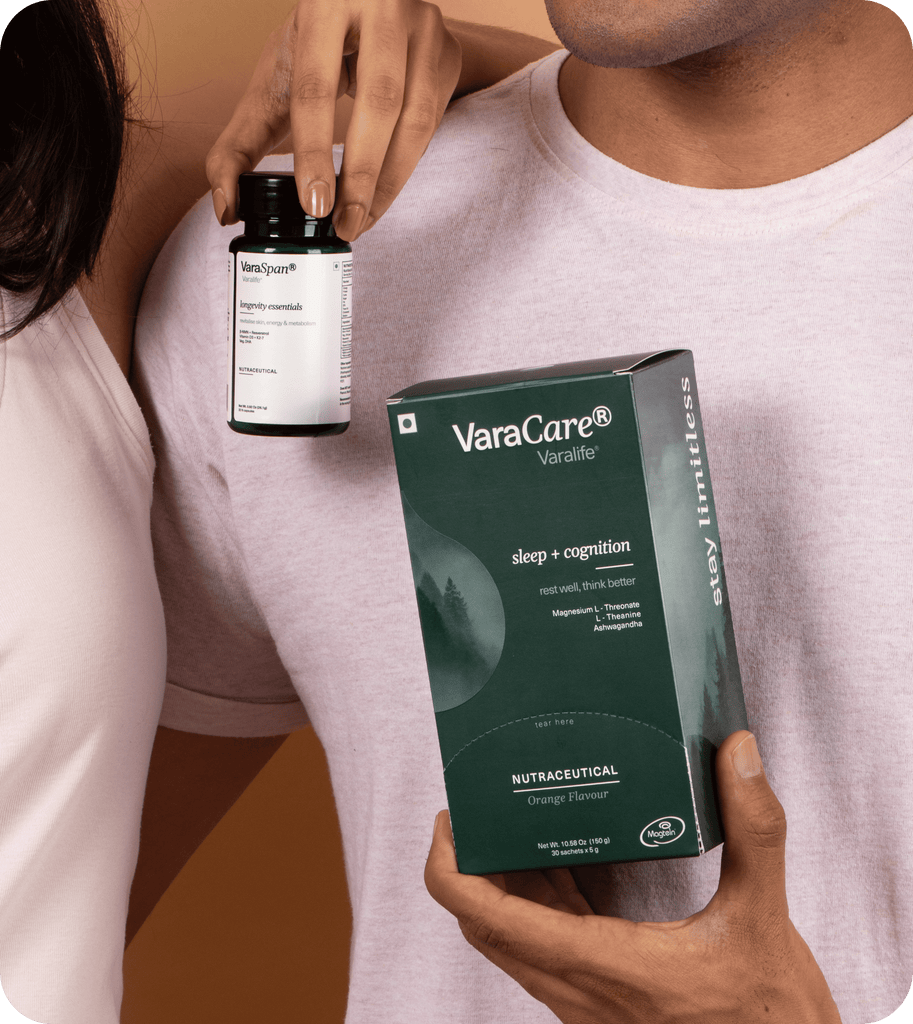
At Varalife®, we understand the importance of quality NMN supplementation. That's why we developed VaraSpan®, our flagship 5-in-1 NMN supplement crafted with premium ingredients such Trans-Resveratrol, Vitamin D3, Vitamin K2-7 and Veg. DHA and backed by scientific research. With VaraSpan®, you can trust that you're getting the support your body needs to maintain optimal NAD+ levels and promote healthy aging.
Conclusion
So, do NMN supplements really work? The evidence suggests they hold significant promise in supporting cellular health and combating the effects of aging. By replenishing NAD+ levels, NMN supplements like VaraSpan® offer a natural and effective way to support overall well-being. Invest in your health today with VaraSpan® and experience the potential benefits of NMN supplementation firsthand.
References
-
Zhang H, Ryu D, Wu Y, et al. NAD⁺ repletion improves mitochondrial and stem cell function and enhances life span in mice. Science. 2016;352(6292):1436-1443.
-
Gomes AP, Price NL, Ling AJ, et al. Declining NAD⁺ induces a pseudohypoxic state disrupting nuclear-mitochondrial communication during aging. Cell. 2013;155(7):1624-1638.
-
Imai S. The NAD World 2.0: the importance of the inter-tissue communication mediated by NAMPT/NAD+/SIRT1 in mammalian aging and longevity control. NPJ Syst Biol Appl. 2016;2:16018.
Does NMN Work? A Direct Answer
Yes, for the specific outcome NMN is designed to move: raising cellular NAD+. Human RCTs at 250 to 500 mg/day consistently show 30 to 70% NAD+ elevation over 8 to 12 weeks (Yoshino 2021, Science). Downstream outcomes documented in trials include improved insulin sensitivity, gait speed, sleep quality, and skin elasticity (Miyawaki 2023). Whether this translates to lifespan extension in humans has not been proven. NMN does not treat any disease; it restores a cellular co-factor whose decline is correlated with age-related dysfunction.
Is NMN a Longevity Supplement? What the Category Actually Means
NMN is classified as a longevity supplement in the scientific literature because it targets an upstream driver of aging — NAD+ decline of roughly 50% between ages 20 and 60 (Imai & Guarente 2014). That decline sits upstream of at least three of the twelve hallmarks of aging: mitochondrial dysfunction, sirtuin-driven DNA repair, and cellular senescence (Lopez-Otin 2023, Cell). NMN restores the substrate the body needs to keep those systems working. It does not extend proven human lifespan, but it targets the cellular root deficit that other longevity interventions (caloric restriction, exercise) also address.
NMN Oral vs NAD+ IV Therapy: Head-to-Head
| Attribute | NMN Oral | NAD+ IV Drip |
|---|---|---|
| Delivery route | Capsule / powder, taken daily | IV infusion (250–1000 mg per session, 2–4 hour drip) |
| Practical setting | Home, no clinician | Clinic or hospital, clinician-administered |
| Documented NAD+ elevation | Sustained ~38–70% over weeks at 250–500 mg/day (Yoshino 2021) | Acute plasma spike, returns near baseline within 24–48 h; (Grant 2019) |
| Adverse events reported | Minor GI complaints at high dose; no serious AEs in published RCTs | Nausea, chest pressure, transient flushing during infusion; reported in intake trials |
| Cost per gram of active (India, 2026) | ~₹15–25 pharma-grade oral NMN | ~₹5,000–15,000 all-in (drip procedure + NAD+ material) |
| Peer-reviewed lifespan / healthspan RCT data | Growing body: fitness, muscle, sleep, skin outcomes measured in humans | Limited; mostly small trials in addiction-recovery and chronic-fatigue contexts |
| Convenience | Daily, sustained cellular exposure | Session-based; sustained effect requires repeat infusions |


